BioPharma
Predicting patient response to arthritis treatment using machine learning

1 in 100 people in Britain today live with rheumatoid arthritis (RA). Unlike osteoarthritis (OA), RA is caused not by wear and tear but by the body’s immune system attacking its own joints. RA can strike quickly at any age – but is most common for people aged 40-60.
Biological therapies are the leading treatment. Clinicians use engineered proteins made from living cells to slow the disease by targeting the specific parts of the immune system that are going rogue. Over the past 20 years they have led to major improvements in helping patients to live with RA.
However, different patients will react differently to different biological therapies depending upon their genetics. This means individual therapies have a failure rate of approximately 40%.
Doctors today have no clinical diagnostic test to predict which approach would work best for which patient, which means many must endure multiple rounds of failed treatment as clinicians attempt to find the right therapy. This is a major problem as the therapies work by disabling parts of the immune system. The risk of infection is high, and side effects can be severe, which makes getting it right first time even more important.
The invention
Professor Costantino Pitzalis and Professor Myles Lewis – scientists at Queen Mary University of London – have invented a way to predict patient response to the three main rheumatoid arthritis biological therapies, and which could be expanded to include similar treatments, so that doctors can select the best treatment for the individual patient.
Their method uses deep molecular phenotyping and machine learning on a small biopsy taken from the patient’s joints. This differs from previous failed attempts to develop a clinical test which relied on blood samples – a strategy which the Queen Mary scientists have concluded to be impossible with current technology.
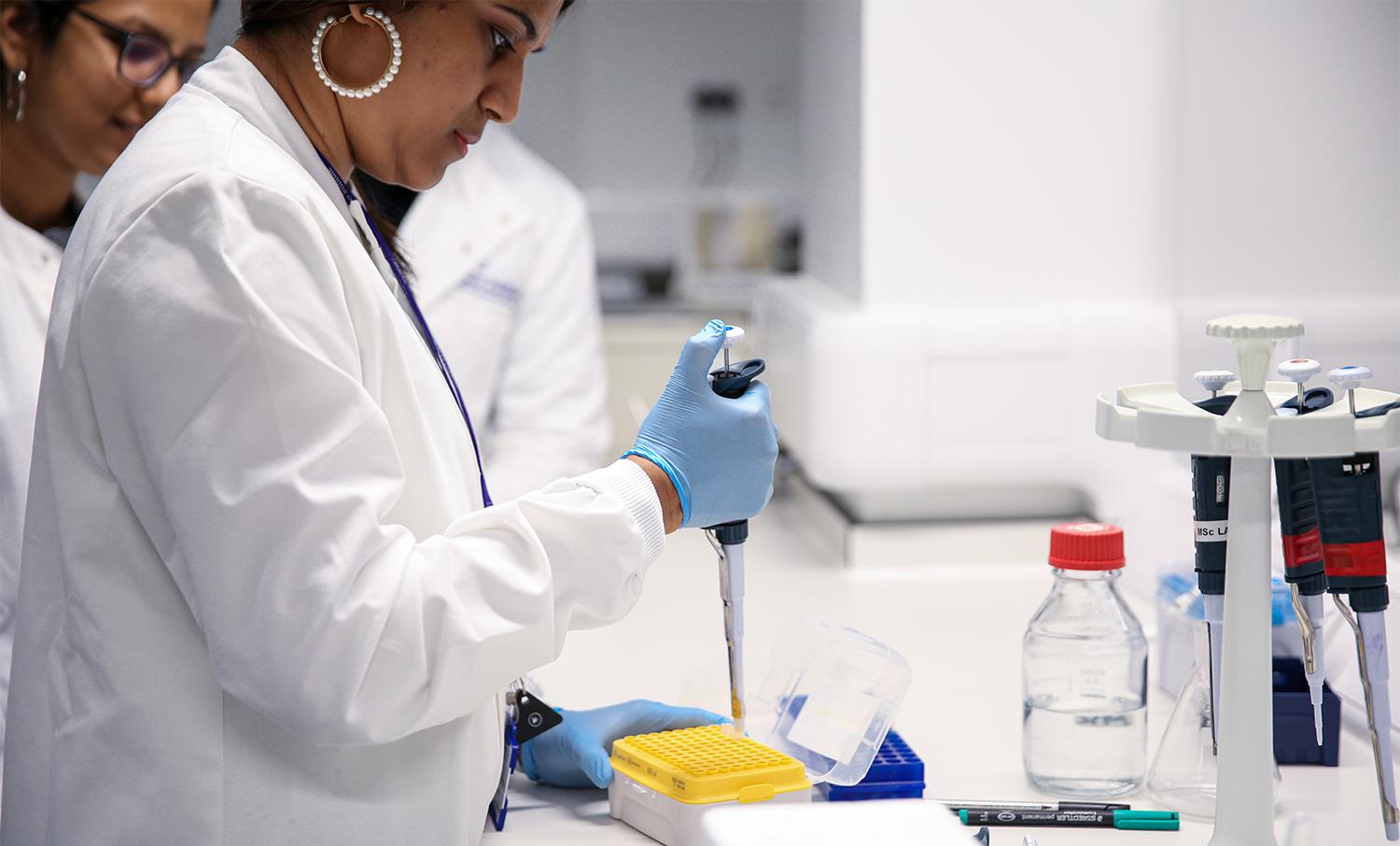
To begin, the patient provides a tissue sample from an affected joint, from which the clinician extracts their RNA and measures the activity of 524 specific genes to understand what’s happening inside the patient’s cells – a technique known as molecular phenotyping.
The data is run through three machine learning models – corresponding to the main biological therapies for RA – which predict how likely it is that the patient will respond well to each therapy.
The clinician can then deploy the highest scoring therapy to minimise the risk of trying ineffective treatments – or use a completely different approach if the model finds that none of the three therapies would work.
The benefits for patient wellbeing could be enormous
Predicting how a patient will respond to a biological therapy has remained a tantalising goal for many years. Previous studies found several possible biomarkers, but none successfully translated to clinical grade tests.
This innovation could have major benefits for patients and healthcare providers alike. Prescribing the right treatment first time would reduce patient suffering and make our healthcare system more efficient.
The research behind the innovation is published in Nature Communications in a paper titled: Deep molecular profiling of synovial biopsies in the STRAP trial identifies signatures predictive of treatment response to biologic therapies in Rheumatoid Arthritis.
We are looking for commercial partners to help develop the approach for clinical use. With a clinical trial underway, the team are on course to be the first to introduce a predictive test into a real-world medical setting. They are the first and only research group to be conducting large, randomised control trials involving gene sequencing of biopsies from RA-affected joints.
Contact
Dr Maria Frolova
Inventors
Prof Costantino Pitzalis, Prof of Rheumatology
Prof Myles Lewis, Prof of Precision Medicine and Rheumatology
Featured media coverage